ADVERTORIAL

My Doctor Said My Shoulder Pain Was “Wear and Tear.” A Rehab Specialist Disagreed

It started as a stiff neck.
I thought I just slept
wrong.
But within months, the stiffness spread into my shoulder—and
suddenly, everyday things hurt.
Brushing my hair. Reaching for a coffee mug. Even pulling a
zipper behind my back.
The worst part wasn’t the pain.
It was realizing my
shoulder simply wouldn’t cooperate anymore.
My doctor glanced at the scan and shrugged.
“Wear and
tear,” he said. “Pretty common after 45.”
His suggestion?
Exercise more.
Which honestly sounded ridiculous. My shoulder already felt worn
down. Now I was supposed to push it harder?
So like a lot of people, I just tried to live with it.
The Conversation That Changed Everything

A few months later, I mentioned it while grabbing coffee with an
old acquaintance of mine — a retired kinesiology professor who
had spent years helping professional athletes recover from
injuries.
He listened for a minute and then shook his head.
“Your shoulder isn’t just aging,” he told me. “It’s disconnected.”
He explained something I had never heard before.
Your neck, shoulder, and arm work as one system — what
specialists call a kinetic chain.
When one part weakens or stiffens, the rest of the chain starts compensating… and that’s when pain shows up.
Suddenly it made sense.
Why Random Stretches Can Actually Make Things Worse

I asked if I should just look up exercises online.
He
immediately said no.
“One of the biggest mistakes people make,” he explained, “is copying random stretches from YouTube.”
When muscles and tendons are already irritated, the wrong
movement can make the damage worse.
“What your body needs first is to wake those muscles back up and restore circulation.”
“You Don’t Have To Go To The Clinic Anymore”
So I asked the obvious question.
“Do I need to start going
to physical therapy?”
He smiled. Because he already knew what I was thinking.
Multiple appointments every week.
Driving across town.
Parking.
Waiting
rooms.
Copays.
For many people, that routine just isn’t realistic long term.
Then
he said something I didn’t expect.
“You don’t always need to go to the clinic anymore,” he said.
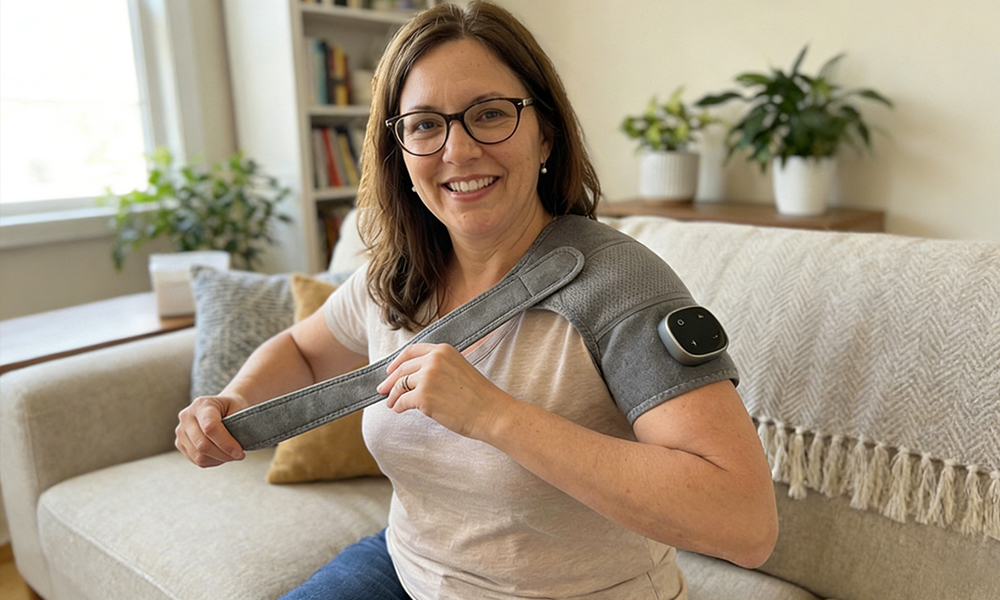
“Sometimes the clinic can come to your sofa.”
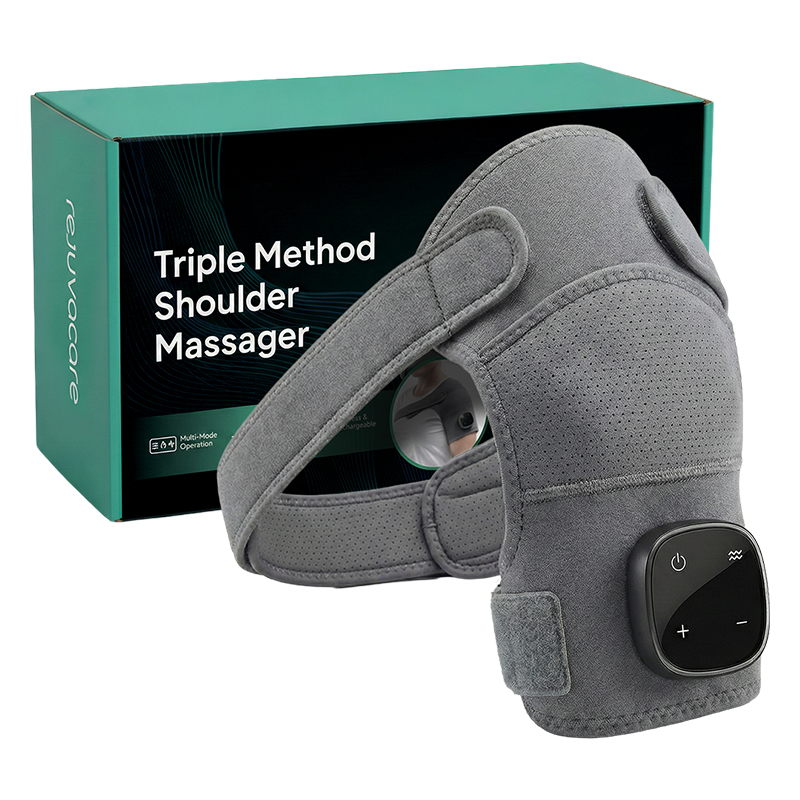
That’s when he showed me something called Graddi ReliefChain Therapy Device.
My Honest First Impression
When the Graddi ReliefChain package arrived, I was skeptical. I’ve tried those vibrating gadgets from the mall before—they usually end up in the 'junk drawer.'
But this felt different. It didn’t just rub the surface; it felt
like it was communicating with my muscles.
Within 15 minutes, that heavy, 'stone-like' feeling in my
shoulder started to lift...
Not dramatically.
But noticeably enough that I kept using
it.
What Makes ReliefChain Different
Most people think pain happens because muscles are "tired."
But the Professor explained that for those of us over 50, the
truth is often the opposite: Our muscles hurt because they’ve
gone "dormant" and "stiff."
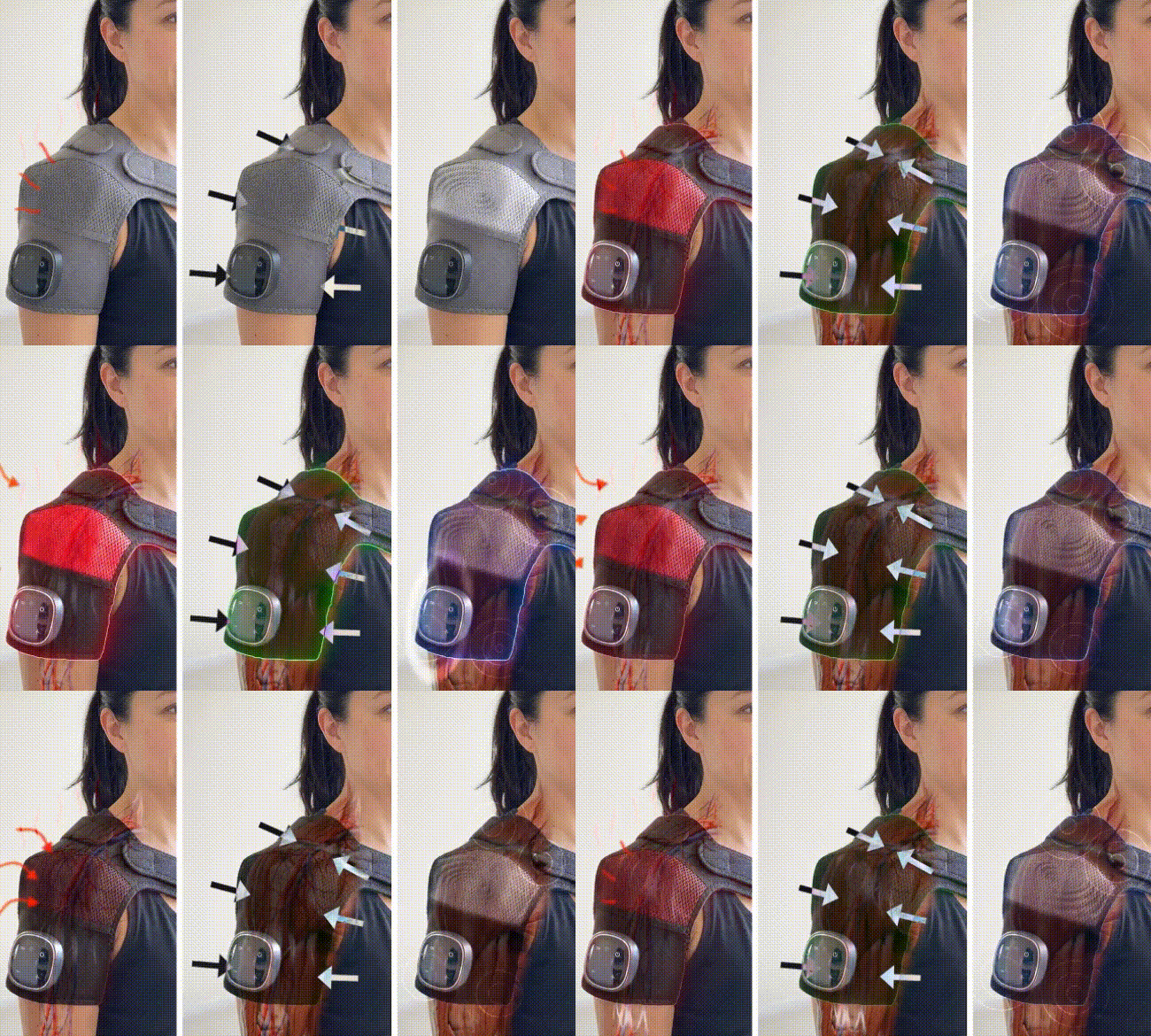
Think of an old rubber garden hose left out in the sun. If you don't move it, it becomes brittle and cracks. Our Kinetic Chain is the same. ReliefChain doesn’t just rub the surface of your skin; it works deeper:
✔️ Breaking "Adhesions": Targeted mid-frequency pulses
reach 3–5 cm below the surface, loosening the “stuck” tissues
that limit your movement.
✔️ Reconnecting the Nerve Path: Chronic pain causes your
brain to "shield" your shoulder. ReliefChain uses bio-electric
signals to re-establish communication between your brain and
your muscles, teaching them how to support your joints again
instead of letting the bone take the brunt.
✔️ Restoring "Micro-Circulation": Healing happens where blood flows. The deep thermal heat draws fresh, oxygenated blood into the "dead zones" of your neck and shoulders, flushing out the metabolic waste that causes that nagging ache.
How It Helps The Problems Many People Over 50 Face
According to feedback from thousands of users, these are the most common improvements people report.
• Morning Stiffness
Gentle Far-Infrared heat mimics a professional warm-up in
minutes.
"Finally, a morning without the 'morning rust'..."
"I’m 67, and for the last decade, my first 20 minutes of the
day were spent moving like a rusted Tin Man. I had to 'thaw
out' my neck just to look at the clock. I started using the
ReliefChain for 15 minutes with my morning coffee, and the
difference is night and day. It’s like it melts the 'glue'
between my vertebrae. I can actually turn my head to check the
blind spot in my car now. That alone is worth every penny."
— Robert H., Florida
• Rotator Cuff Strain
Patented "Wrap-around Pulses" cover the neck and shoulder
simultaneously.
"I can do my own hair again!"
"It sounds like a small thing, but when you can't lift your
arm high enough to brush your hair or put on a sweater without
a sharp 'gasp' of pain, you lose a bit of yourself.
ReliefChain changed the game. It doesn't just vibrate; it
feels like it's lifting the weight off my rotator cuff. Last
week, I reached for a box on the top shelf without even
thinking about it. I almost cried when I realized what I’d
just done."
— Margaret T., Arizona
• Nerve Pinching
Rhythmic compression improves blood flow to areas that feel
numb or tingly.
"The 'electricity' in my fingers finally stopped."
"I had this constant, annoying tingling down my right arm. My
PT said it was coming from my neck, but the clinic was so far
away. This device hits the exact spot at the base of my neck
that my hands could never reach. Within two weeks of daily
use, my grip feels stronger, and I’m back to my knitting
projects without having to stop every five minutes to shake my
hands out."
— Linda S., Ohio
• Deep Muscle Knots
Targeted vibration reaches the trigger points under the
shoulder blades.
"Better than a $100 massage."
"I’ve spent a fortune on deep-tissue massages trying to get
rid of the 'knots' under my shoulder blades. They’d feel
better for an hour, then tighten right back up. The
ReliefChain is different because I can use it every single
night while I watch the news. It digs into those stubborn
trigger points. It’s like having a professional therapist
living in my spare bedroom, but without the $50 co-pay."
— James L., Texas
Designed for "Our" Generation
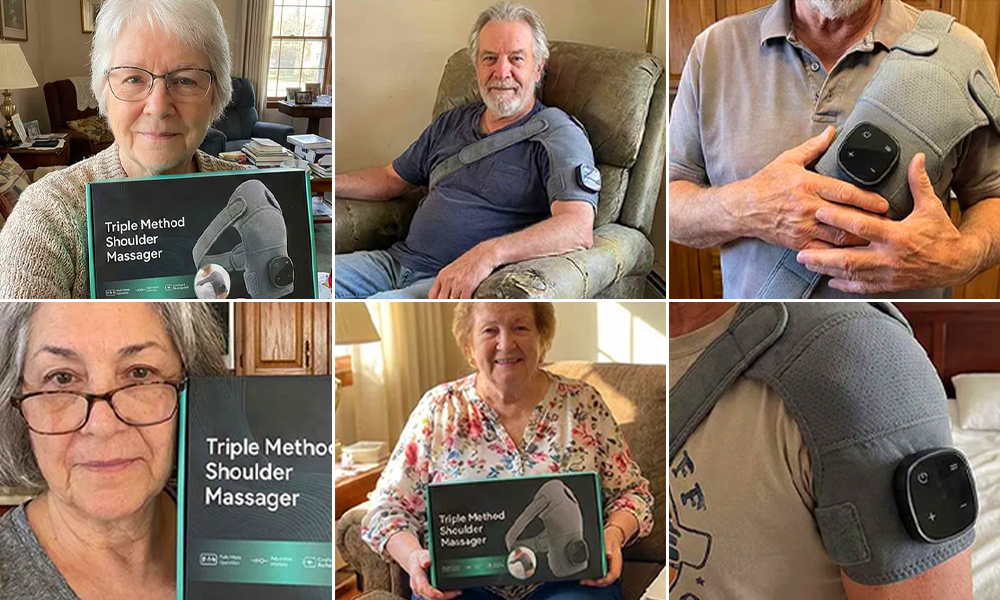
I know you're like me—you're tired of gadgets that require
a PhD to operate.
That’s why I love the details of ReliefChain:
• No App Required
No Bluetooth, no downloads, no
setup headaches.
• Easy Controls
Large buttons and a simple
display.
• Hands-Free Design
It drapes over your shoulders
and stays in place while you read, watch TV, or relax.
• Drug-Free Relief
No pills. No worrying about
interactions with medications.
The Cost That Surprised Me
When I first looked into physical therapy costs in the U.S., I
was shocked.
Many clinics charge around $200 per visit.
Twice per week for six months?
That’s close to $9,600 — not
counting time, travel, or parking.
That’s why so many people are now exploring
at-home therapy devices.
After sharing my experience, I reached out to the company to see
what it costs.
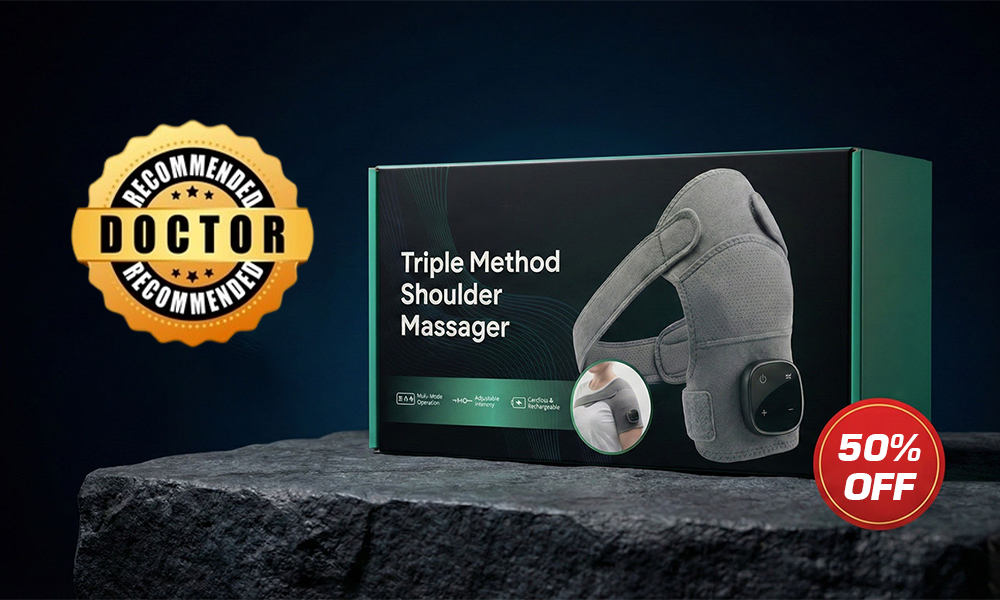
Right now, they’re offering it for
$49.99 as part of a
promotion.
That’s less than the cost of a single therapy session.
They’re also offering a 30-day home trial, so people can try it and decide if it works for them.
I’m not saying every shoulder issue is the same.
But if you’ve been told your discomfort is simply “part of
aging,” it might be worth looking into solutions that focus on
restoring movement instead of just masking pain.
For me, learning about the kinetic chain changed how I look at
it entirely.
And ReliefChain has become part of my routine whenever my neck and shoulders start tightening up again.